

Under 150 milliseconds is generally imperceptible. Between 150 and 300ms introduces a slight but tolerable delay. Above 300ms starts to feel like a noticeable lag, and above 500ms, live Q&A becomes genuinely difficult.
Webinar Glossary
Latency
Latency is the amount of time that passes between an action and a web application's response to that action due to network congestion or network distance.
What is latency?
Latency is the amount of time that passes between an action and a web application's response to that action. For example, if a user clicks on a CTA on a landing page the amount of time it takes for something to happen is latency. In a webinar or video meeting, latency issues are one of the very first causes of robotic sounds and audio issues during the live session and replay.
Latency vs bandwidth
Although bandwidth and latency are sometimes used interchangeably, they are two different concepts. Latency is the time it takes for data to travel from one point to another. Bandwidth is how much data can be sent at a given time.
What factors impact latency?
Latency is impacted by the distance between network interfaces and network congestion. It is impacted by:
- Distance between networks
- Network congestion
- Packet loss
Distance between networks
If client devices are located far apart network response times will be slower. These slower network speeds extend the Round-trip time or RTT. RTT is the time it takes for a network request to go from a starting point to a destination, and then back again to the starting point. If x is the latency from A to B and y is the latency from B to A, then the RTT is calculated as x + y.
Network congestion
Network congestion is related to bandwidth. The more congested the bandwidth is, the slower the RTT, and the higher the latency.
Packet loss
Data that is sent through the internet is called a packet. When these packets fail to reach their destination it is considered packet loss.
Packet loss could be due to the following reasons:
- On mobile and wireless networks, it can be common in high interference areas (imagine a small apartment building with tons and tons of wifi routers).
- Other types of interference can also be problematic - being too far from the router or the signal having to pass through too many walls or the bandwidth division among connected devices.
Sometimes this happens further upstream with the ISP. If they are facing a problem or are performing maintenance, that can also affect packet loss.
Troubleshooting connection issues
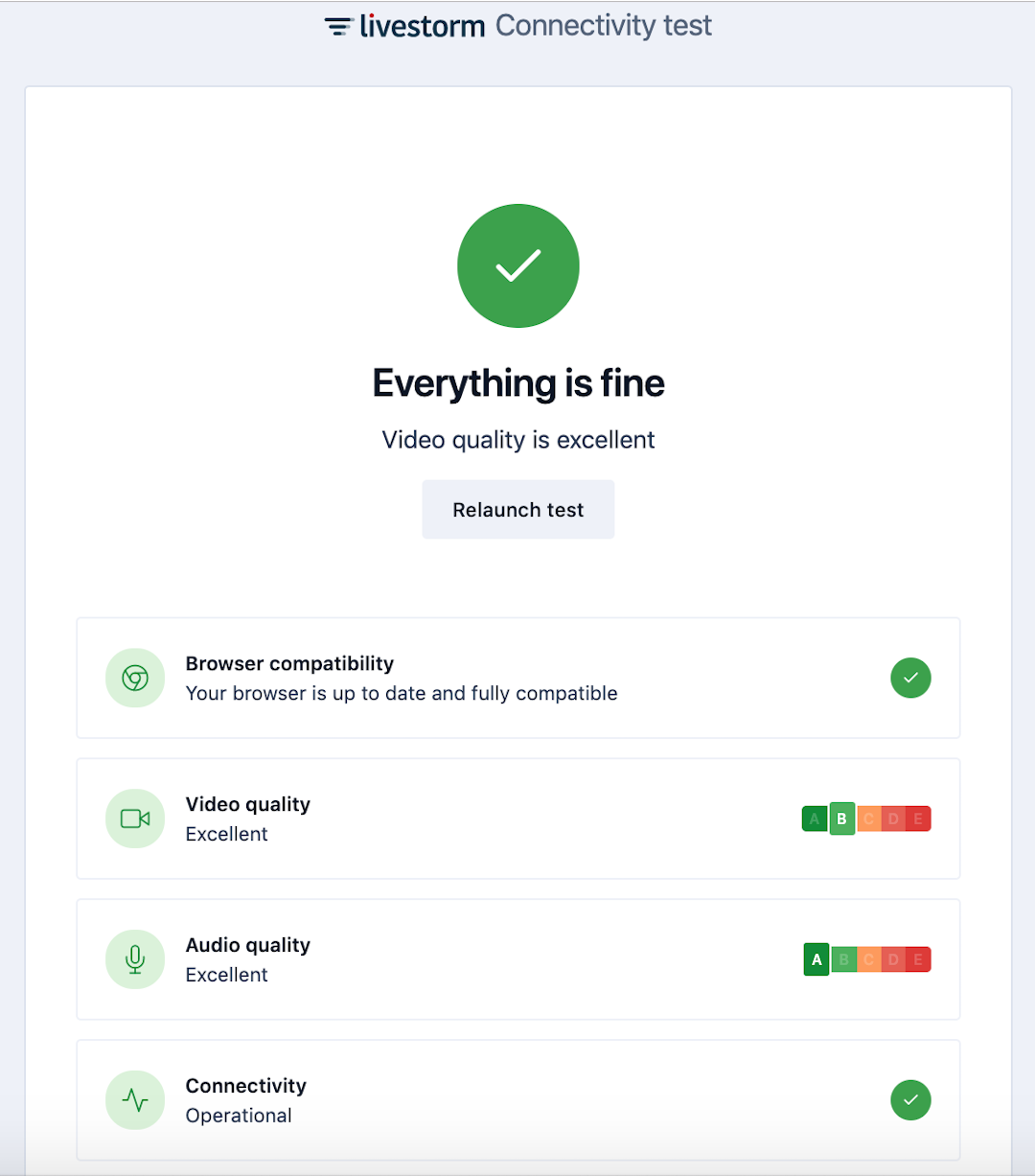
The best webinar software will have a way for users to check if their connection is stable, and troubleshoot any problems. Running connection tests before presenting will avoid any issues with latency.
As a rough guide: latency under 150 milliseconds is generally imperceptible to viewers, 150–300ms introduces a slight but tolerable delay, and anything above 300ms starts to feel like a noticeable lag — people talking over each other, awkward pauses. Above 500ms, real-time back-and-forth like live Q&A becomes genuinely difficult.
To diagnose latency issues, check three things in order: distance to the nearest server (a wired connection close to a data center will beat Wi-Fi from another continent), local network congestion (other devices streaming video on the same network), and packet loss — which shows up as choppy audio or frozen frames rather than a steady delay.
Editorial & methodology — Written and reviewed by the Livestorm content team, based on first-party product experience and platform documentation. Last updated: July 2026.
Frequently Asked Questions
What counts as bad latency on a webinar?
Can you reduce latency without changing your internet connection?
Somewhat. Closing bandwidth-heavy background apps, connecting via ethernet instead of Wi-Fi, and closing unused browser tabs can all shave off some latency.
Does latency affect a recording the same way it affects a live session?
No. A recording captures what was seen at the time, so anyone watching the replay later won't experience the delay live attendees did.
Why do some attendees experience latency while others on the same webinar don't?
Because it depends on each person's own connection and distance to the server, not on the webinar itself.



Try Livestorm for free
Get started in minutes and run your first engaging webinar today.
- No credit card needed
- No installation required