Put emails on auto-pilot
Send unlimited customized reminders and follow-up emails.
Published on January 1, 2026 • About 10 min. read
Written by Molly Hocutt
The Pipeline Truth: 2026 Webinar Benchmark Report

Table of content
Share this article
Key Takeaways
Zoom alternatives such as Livestorm, Microsoft Teams, and Google Meet offer enhanced flexibility, integration options, and event management capabilities.
Livestorm provides an all-in-one solution with browser-based access, engagement analytics, and support for up to 3,000 attendees.
Google Meet is free for up to 100 participants and 60-minute meetings, while Jitsi offers a fully free, customizable video conferencing experience.
WebinarJam and Demio focus on interactive webinars, with WebinarJam supporting up to 5,000 attendees and Demio emphasizing engagement features.
Hubilo is tailored for large online events, supporting up to 4,000 attendees but at a higher price point, starting at $800 per month.
Zoom is a great video conferencing tool overall. But you'll want to consider an alternative to Zoom if you need to reduce costs and manage all your video calls, webinar, and online events with a single tool.
Luckily, there are a few powerful options on the market that offer better flexibility, customization, and pricing. In this article, we’ll walk you through the top features and use cases of top Zoom competitors so you can decide for yourself.
For the full market, not just Zoom alternatives, see our guide to the best webinar software.
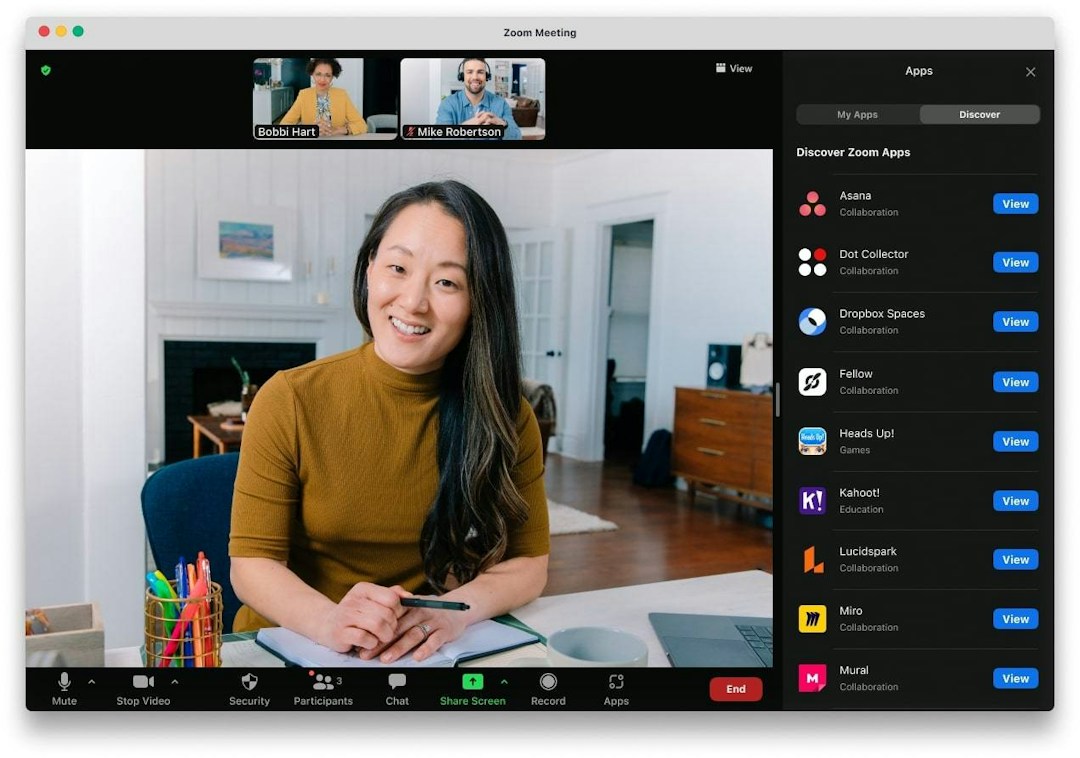
Zoom is one of the most popular online meeting tools. Its free plan allows free 40-minute video calls, while paid plans support events with 100+ attendees lasting up to 30 hours.
With Zoom, you also get access to engagement tools like filters, polls, audio sharing, and whiteboards. Plus, you can use Zoom to record meetings and share them with viewers on demand.
While Zoom is a high-quality video conferencing tool, it isn't the best choice for every use case or budget. Consider looking for an alternative if you want a platform that:
Offers a better user interface (UI)
Includes a wider range of integrations
Has a better track record with security
Allows you to plan, host, and analyze all your webinars and virtual events
Provides reliable customer support
Put emails on auto-pilot
Send unlimited customized reminders and follow-up emails.
The best video conferencing tool is the one that solves all your needs, integrates with your tech stack, and has a price point that works with your budget. Here are nine powerful Zoom alternatives to evaluate:
Livestorm: Best all-in-one video communication platform
Microsoft Teams: Best for enterprises and company-wide meetings
Google Meet: Best for one-on-one meetings
GoTo Meeting: Best for department meetings
Jitsi: Best for custom video conferencing
Webex Meetings: Best for inclusive global meetings
WebinarJam: Best for end-to-end webinar planning
Demio: Best for interactive and engaging webinars
Hubilo: Best for large online events
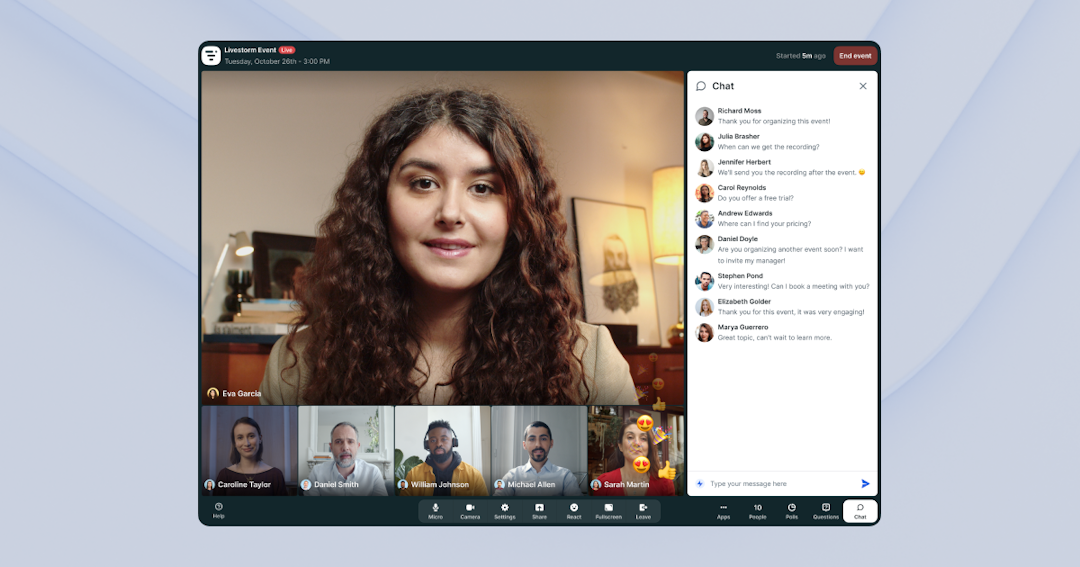
Livestorm is an all-in-one platform for video communication. This secure video conferencing software manages every part of an event—from planning and promotion to hosting the event to repurposing content and reviewing analytics.
While Livestorm can host 1:1 or one-to-many meetings, it works just as well for webinars or virtual event with up to 3,000 attendees. There's no need to purchase multiple products, as one platform handles all your video conferencing needs.
Engagement features: Livestorm invites attendees to participate in events and meetings via:
Emoji reactions
Polls
Question upvotes
Virtual backgrounds
Screen and multi-media sharing
File sharing
Ease of use: Livestorm is incredibly simple to use. It’s completely browser-based, so attendees never have to download any apps or make an account to use it. It’s also designed to be completely intuitive for all users, whether they’re creating an event or joining a call.
Integrations: From customer relationship management (CRM) and marketing tools to automation and analytics apps, Livestorm integrates with the tech your team already uses.
Events and webinar features: Since Livestorm is an all-in-one video platform, you can use different functionalities to plan, host, and analyze the event’s performance. These are:
Custom registration pages
Scheduling tools like Calendly
Automatically record and share the event with participants
Get unlimited event replays
Access to detailed engagement analytics
Email reminders
Room customized branding
Access to contact records
Livestorm is free video conferencing software for individuals hosting 20-minute meetings with up to 30 attendees. Then, pricing starts at $79 per month for 4-hour meetings with up to 100 attendees (with annual billing). For sessions up to 12 hours and up to 3,000 attendees, contact our sales team for a custom quote.
Livestorm is equally powerful for joining a quick call with your co-worker or a hosting giant hiring session for 3,000 participants. If you’re comparing Livestorm vs Zoom, you’ll see that all paying Livestorm users receive world-class, multiple-language chat support. That flexibility and expert assistance make Livestorm suitable for all kinds of business or educational needs.
Livestorm is best for:
Product demos
Company communication (e.g. workshops, meetings, group discussions)
Live Q&As
Employee onboarding
Live events
Podcast interviews
Hiring sessions
Microsoft Teams is a team collaboration tool that’s part of the Microsoft 365 suite of products. It allows you to communicate with your team members through team chat, in-app video calls, and online meetings.
Change in status information: Teams automatically updates the status of each user so you can see if your colleagues are available, away, busy, or sharing their screen.
Ease of access: Teams is easy for external users to join meetings as it’s accessible through a browser. It integrates with your Outlook calendar, so you can join calls from either platform. However, Microsoft Teams alternatives like Livestorm are more intuitive and easier to use.
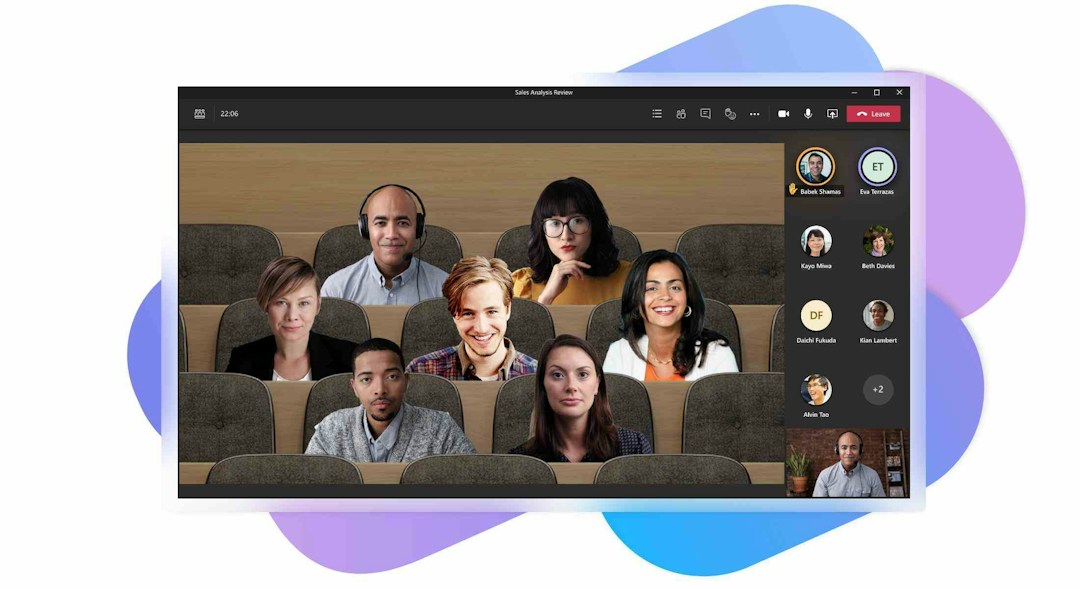
Together mode: This feature makes the meeting room look like a real-life conference room. It displays everyone’s face sitting next to each other on virtual chairs to mimic in-person meetings.
Microsoft Teams pricing starts at $4 per user per month, based on an annual subscription. For access to other Microsoft 365 tools like PowerPoint and OneDrive, you'd have to upgrade to a pricier plan.
Microsoft Teams offers versatility to teams who might have a one-to-one spontaneous meeting one afternoon and a big quarterly all-hands the next. However, since the Microsoft 365 Business Basic plan only allows for 300 attendees, large companies might need an additional meeting platform for bigger events or company-wide meetings.

Google Meet is a widely popular video meeting platform that replaced Google Hangouts. It’s ideal for individuals and businesses that use Google Workspace for communication and Google Drive for storage. Google Meet is browser-based on a desktop, but only accessible through a mobile app when joining from your phone or tablet.
Dial-in audio connection: Google Meet allows users to call a local phone number and access the meeting directly from their phones. That’s a good solution for when you're having connectivity issues. It also comes with a “meet now” button when you need to start a meeting spontaneously.
Picture-in-picture view: this platform allows you to share your screen and scroll or edit while also seeing the faces of your colleagues.
Interactivity and engagement features: Google Meet supports engagement features like emoji reactions, breakout rooms, Q&A sessions, and whiteboard collaborations.
Google Meet is part of the Google Suite and is free to anyone who has a Gmail account. Free users can host 60-minute video chats for a maximum of 100 attendees. Business plans come with the complete Google Workspace solution and prices begin at $6 per user per month.
Google Meet is a great option for personal or freelance project calls. Or, for one-on-one meetings as it has great audio and video quality and you won’t need to use many additional features. If you’re comparing Google Meet vs Livestorm, you’ll see that Livestorm is better for engagement and reviewing meeting analytics.
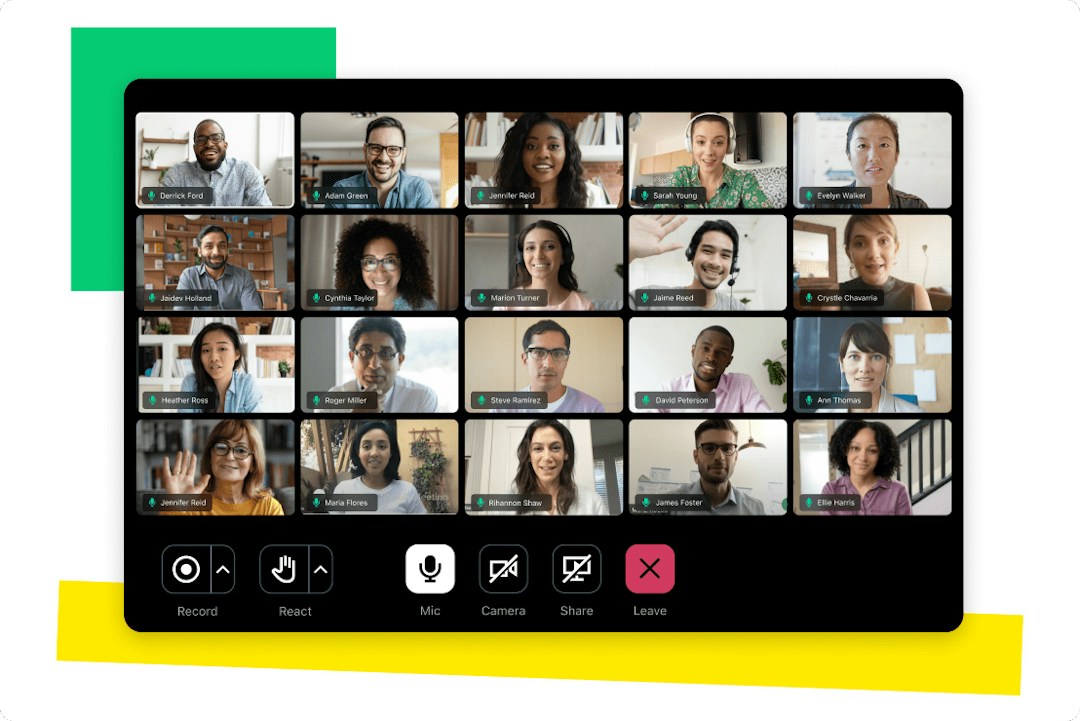
GoTo Meeting is part of the GoTo suite of products, which includes GoTo Webinar and GoTo Training. You can use GoTo Meeting for everything from company meetings to onboarding new team members. It also includes engagement features like screen sharing and polls, and you can use it to host meetings of up to 250 attendees.
Smart assistant: Let GoTo Meeting's AI-powered assistant detect action items and highlights so you can focus on the meeting.
Business messaging: Use GoTo Meeting to chat with colleagues, prospects, or customers before or after a video meeting.
Personal meeting room: When you need to host smaller meetings, set up a personal meeting room accessible via a dedicated link.
Prices for GoTo Meeting start at $12 per organizer per month for 150 participants (with annual billing). However, it's important to note that GoTo Webinar has separate pricing, which starts at $49 per month.
GoTo Meeting is ideal for hosting meetings with no time limits. Invite up to 250 people to any meeting, and divide them into breakout rooms for more focused conversations.
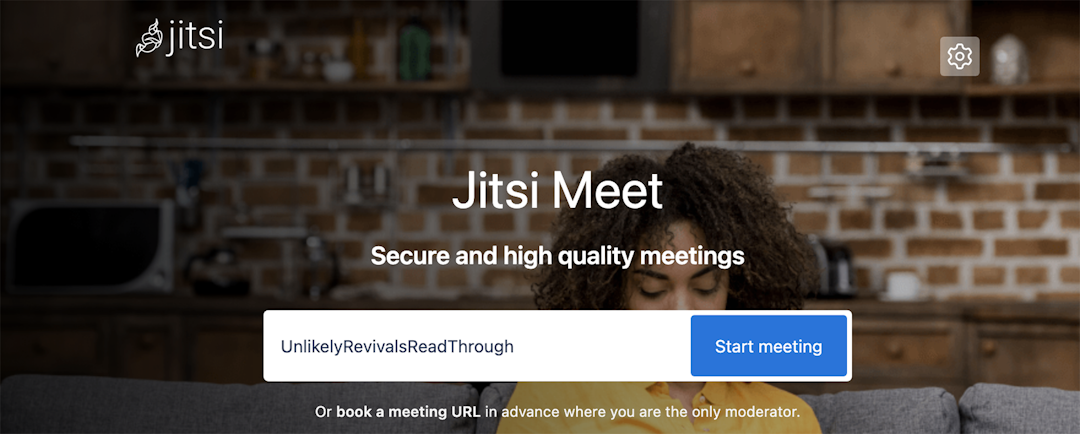
Jitsi is an open-source video conferencing app. Teams can use Jitsi Meet to host secure, high-quality meetings, and developers can embed the platform on the company's website or mobile app.
Custom hosting options: Jitsi offers several options for hosting meetings, including a browser-based interface, a mobile app, and embeddable software.
Live streaming to YouTube: In addition to hosting meetings on Jitsi, you can live stream them to YouTube to reach a wider audience and record the content.
Audience engagement: Jitsi offers a range of engagement tools, including text chatting, screen sharing, and hand raising as well as integrations with other apps.
Jitsi is completely free to use.
Because Jitsi is free, it's a top Zoom alternative for businesses on a small budget. It's also ideal for tech-savvy teams that want to embed a video conferencing app into their website and create a custom solution.
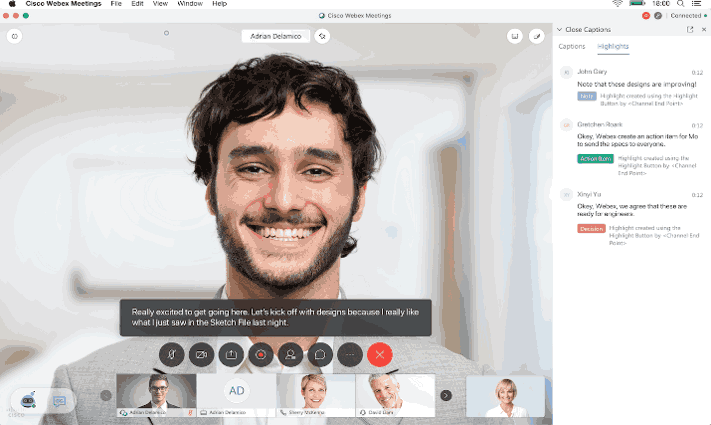
Webex Meetings is the Cisco product suite's video conferencing platform. It's designed for enterprise users, as it supports meetings with anywhere from two to 1,000 attendees. While Webex does have a basic free version, its fully featured plans have enterprise pricing.
Real-time translation and captions: Invite colleagues around the world and without worrying about language barriers.
AI-powered assistant: Webex Assistant handles note taking, action items, and message drafts to help teams work faster.
Anywhere calls and meetings: Tune in from your browser, the desktop app, or the mobile app to avoid missing key moments.
Webex Meetings has a free version for meetings up to 40 minutes long with 100 attendees. Paid plans start at $144 per user per year.
Webex Meetings is best suited for video conferences with global audiences. Thanks to its real-time translations, captions, and desktop and mobile apps, it's great for teams that work around the world.
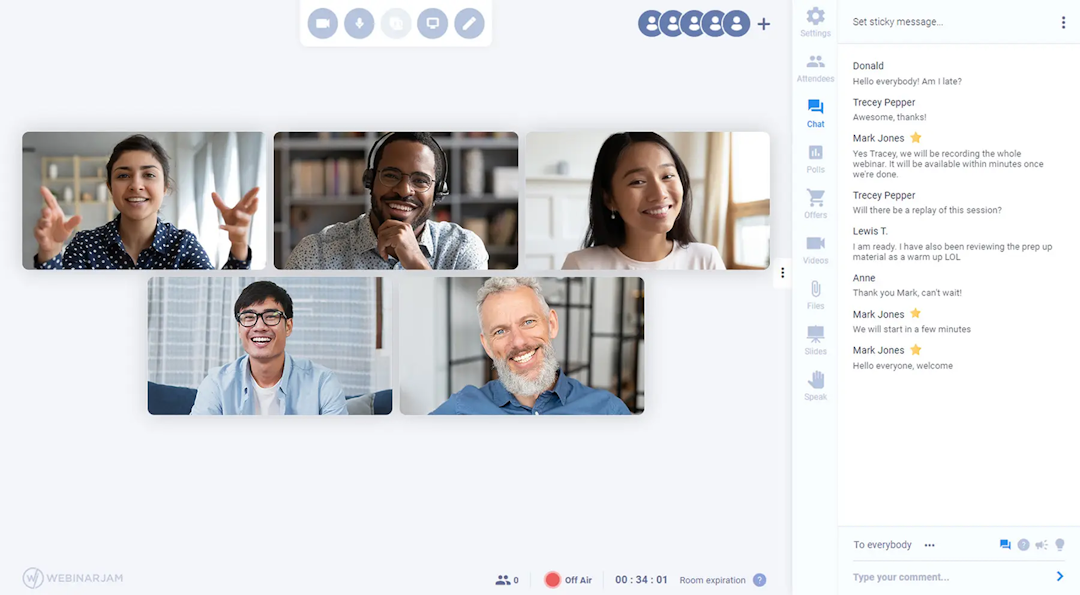
WebinarJam is a webinar platform that allows unlimited meetings and online events with up to 5,000 attendees. From its AI-powered meeting agenda tool to its automated meeting recordings, WebinarJam simplifies the planning and hosting process from beginning to end.
Multiple presenters: WebinarJam lets you host webcasts with up to six different presenters. This is helpful when you invite a panel to participate in an event.
Offer buttons: A bit like Livestorm’s CTA buttons, this WebinarJam functionality allows you to sell a product to your webinar attendees directly from the live stream.
Meeting rooms: Create a dedicated meeting room for your team so colleagues, prospects, or clients can join from a static URL.
WebinarJam is one of the most cost-efficient webinar platforms in the market. Pricing starts at $39 per host per month for up to 100 attendees (with annual billing). The premium plan is $379 for six hosts and 5,000 attendees.
WebinarJam is one of the most accessible video conference platforms. It’s easy to use and lets you handle the entire process of hosting a live or pre-recorded webinar in one app. Unlike Livestorm, this platform isn’t for regular meetings.
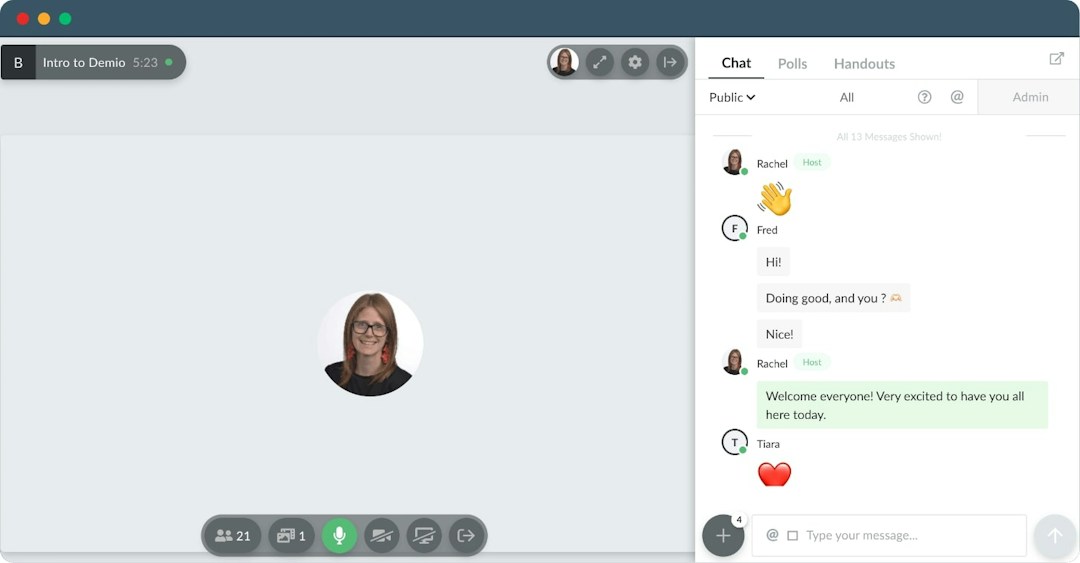
Demio is a browser-based webinar platform that’s fast and easy for attendees to join. It offers excellent engagement features, including an AI-powered chat feature for on-demand webinars.
Superb screen-sharing: Upload your webinar presentation to Demio to share and interact with the materials without switching apps.
Customizable registration pages: Create and edit registration pages to gather as much information from your prospects as you need. You can also embed the registration form on your website or landing page.
Engagement and interactivity features: Keep attendees engaged using polls, CTA buttons, in-app handouts, Q&A tracking, and invitations for attendees to participate on stage.
Demio isn’t a cheap option as pricing begins at $42 per host per month for webinars with up to 50 attendees (with annual billing). The premium plan allows up to 3,000 attendees and up to 10 presenters on stage at a time.
Demio has a large set of engagement features designed to spark conversations with attendees. It's helpful for hosting powerful and entertaining live or pre-recorded webinars.
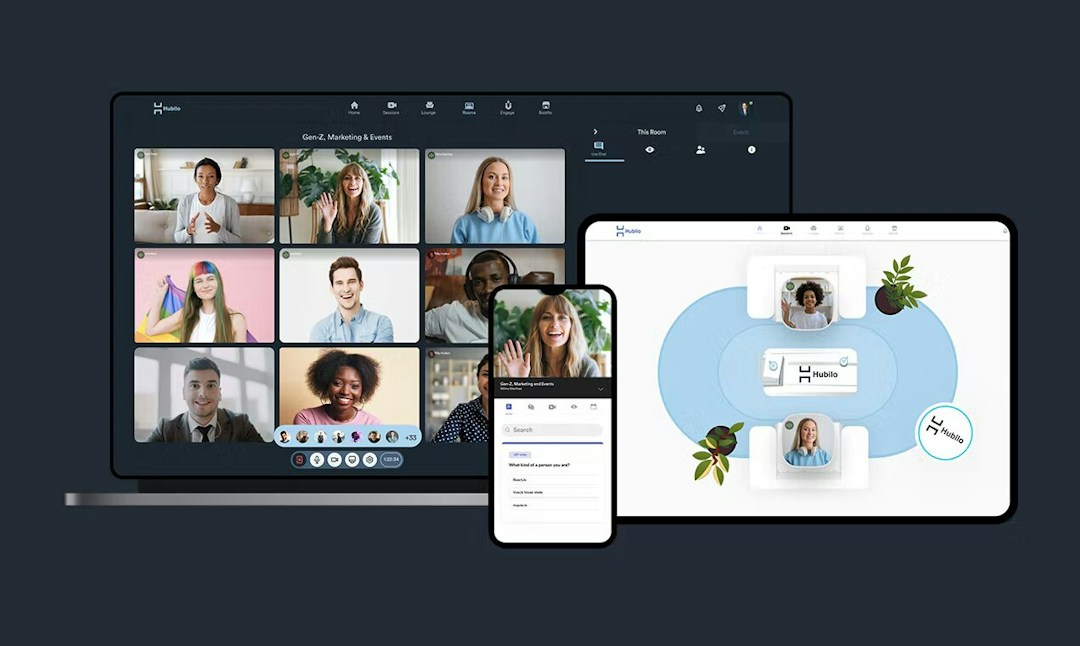
Hubilo is an event hosting platform for big online and in-person events. It allows up to 4,000 online attendees and comes with a large suite of engagement features. Hubilo also offers branding customization and access to event analytics.
Event Networking Community Platform: Hubilo has a networking platform where registrants join a forum to build engagement pre- and post-event connections with other members of the community. The platform creates very intuitive virtual spaces for discussion in a chat room.
Shallow learning curve: Hubilo users value that this platform is easy to follow and you can set up your first event in no time.
Multi-tier ticketing: this platform lets you charge for tickets and offer different prices, discount codes, and bulk buy offers to boost your sales.
Hubilo is one of the most expensive options on this list, with prices beginning at $800 per month for 2,000 attendees (with annual billing). However, you'd need to upgrade to the next tier for custom branding and content repurposing features.
Hubilo is meant for large online events. With Hubilo, you can create registration pages, sell tickets, host events, repurpose content, and analyze metrics.
Zoom is a perfectly functional video conferencing tool. But you should consider Livestorm if you want a single app that can host all of these events:
One-on-one meetings
Team meetings
All-hands meetings
Deminars and sales calls
Pre-recorded and live webinars
Large online marketing events
Livestorm is the only video conferencing solution you’ll need for your video engagement activities. You can create registration pages, send automated email reminders, engage with participants during the meeting, and get access to deep meeting analytics. You can even reach a wider audience and collect attendance fees using our Eventbrite integration.
Just like Zoom, Livestorm also offers interactive whiteboards, emoji reactions, and polls. So, you’ll be able to interact with your audience in a similar way and get better engagement analytics.
The best free alternative to Zoom is Google Meet. It's free to use and lets you host 60-minute meetings with up to 100 participants. But if you don’t already use Google Workspace and you only need to host quick meetings, try Livestorm. Our specialized video conferencing tool lets you host interactive 20-minute meetings with 30 people.
Livestorm is better than Zoom for virtual meetings because Livestorm is the only app you’ll need to host any online event. Livestorm is also a powerful tool for:
However, Zoom offers longer meeting lengths. Its free plan also allows more attendees to join a meeting.
Zoom is a great option for video conferencing. However, Livestorm can solve all your online meeting needs with just one tool. Plus, there's no app to download, as Livestorm is accessible via a browser-based link.
Livestorm is a strong alternative built specifically for webinars and virtual events, offering built-in registration pages, automated reminders, engagement tools like polls and Q&A, and analytics to track performance without needing extra integrations.
Yes, Livestorm offers a free plan that lets you test core features like registration, live engagement tools, and basic reporting before upgrading to access higher attendee limits and advanced automation.
Unlike Zoom, which is designed primarily for meetings, Livestorm is purpose-built for webinars and events with native registration workflows, email sequences, engagement features, and detailed analytics all in one platform.
Livestorm competes with both webinar-specific platforms and video conferencing tools that add event features. The best fit depends on your needs for marketing automation, CRM integrations, engagement tools, and post-event analytics.
Yes, but usage is shifting from ad-hoc meetings to more structured formats like webinars, product demos, and virtual events that require registration, engagement tracking, and measurable outcomes.
Livestorm combines the entire webinar workflow in one tool, from registration pages and email automation to live engagement and post-event analytics, eliminating the need to stitch together multiple solutions.


The Pipeline Truth: 2026 Webinar Benchmark Report
Drive more registrations, boost attendance & multiply content 13x. Based on 7M+ registrations, 33K sessions + 850 go-to-market leader insights.
About the author
Molly Hocutt - Content Manager
Molly joined Livestorm in 2019 as a Content Manager and manages written content production. Her work focuses on lead generation and organic website traffic.
Related categories
Featured resource
The Pipeline Truth: 2026 Webinar Benchmark Report
Drive more registrations, boost attendance & multiply content 13x. Based on 7M+ registrations, 33K sessions + 850 go-to-market leader insights.